3 min read
How to clean natural-bristle brushes without ruining them
Natural bristles last for years if you treat them right. Here is the simple routine for after every grooming session — and the two mistakes that flatten a brush for good.
By Masiel Spark

A good natural-bristle brush is an investment. Kept clean and dry, it holds its shape and its stiffness for years. Left wet, packed away dirty or washed the wrong way, it splays, smells and loses bristles long before it should.
The good news: caring for one takes a minute after each session and a few minutes every few weeks. This is the routine we recommend for our own brushes — beechwood bodies, natural bristles and leather straps — and it works for any brush built the same way.
Why water is the real risk
Natural bristles don’t mind water. The wood they are set in does. When water soaks into the base of the brush, the wood swells, the bristles loosen and the leather strap stays damp. Let that happen often enough and the brush starts to shed and lose its shape.
Wash the bristles; keep the wood dry.
Everything below follows from that one rule.
After every session: one minute
Knock it out. Tap the brush firmly against a post or a hard surface, bristles down, to shake out loose hair and dust.
Comb it with the curry comb. Run the curry comb through the bristles: the metal rings pull out the hair that knocking leaves behind.
Let it air out. Leave it in the open for a few minutes before it goes back in the bag, especially on a humid day or after a sweaty ride.
Every few weeks: a proper wash
When the bristles look greasy or dull, or the brush starts to leave dust behind instead of lifting it, it’s time for a wash.
Fill a bowl with lukewarm water and a little mild soap.
Hold the brush by its body and swish only the bristles through the water. Don’t dip the wood or the strap.
Rinse the bristles in clean water until no soap is left.
Shake out as much water as you can with a few firm flicks.
Stand the brush bristles-down on a towel to dry, away from radiators, heaters and direct sun.
Give it time. A brush that feels dry on the surface can still be damp at the base, so let it dry completely — overnight is ideal — before you use it or pack it.
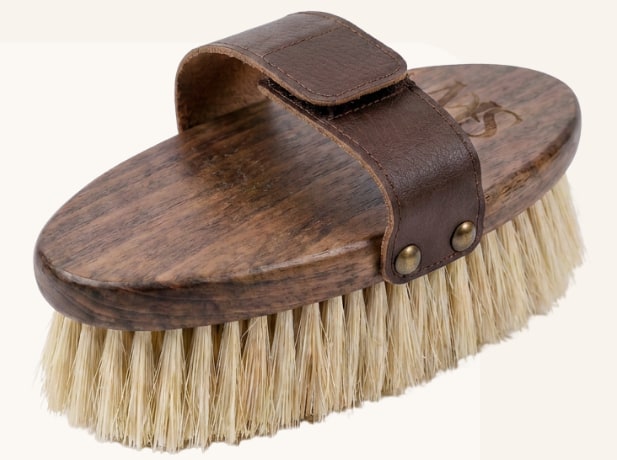
The two mistakes that ruin a brush
Drying it bristles-up. It looks tidy, but the water runs straight down into the base, where the bristles meet the wood. That is exactly where a brush starts to fall apart. Always dry it bristles-down.
Packing it damp. A bag closed over a wet brush keeps the moisture in. The bristles stay damp, the wood never dries out, and moisture can mark the leather and the lining of the bag. Only dry tools go in.
A few more habits that help
Use each brush for its job. A soft finishing brush pushed through caked mud wears out fast; that’s what the dandy brush is for.
Keep heat away. Hair dryers, radiators and sunny windowsills dry the wood too fast and can crack it.
Store your brushes in their bag, not loose in a bucket where the bristles get bent.
Every tool has its own care notes on its page — start with the dandy brush or the soft finishing brush. And if you’re unsure about a brush, write to us: we’re happy to help.
